Centene · Enterprise healthcare
Designing the member experience
Improving how care teams understand member data and how Medicare users find the right information, across a complex healthcare ecosystem.
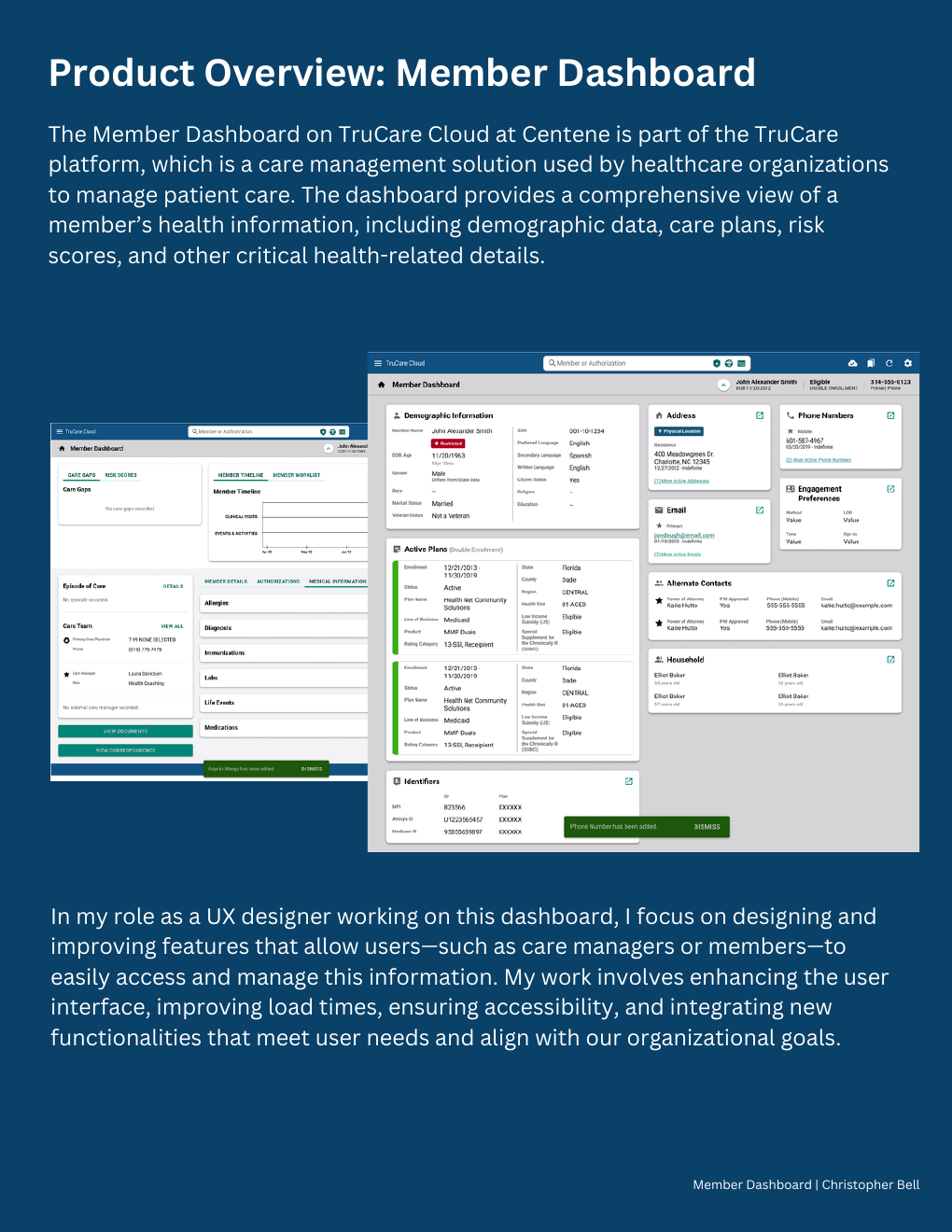
The portfolio story
One ecosystem. Three different kinds of complexity.
As the sole UX designer for the Member Dashboard squad, I worked with a product owner and development lead to improve a live care-management product.
The work moved between sensitive identity data, clinical risk information, and public Medicare discovery. Each feature required a different balance of clarity, privacy, accessibility, and technical feasibility.
Workstream 01
Member demographic card
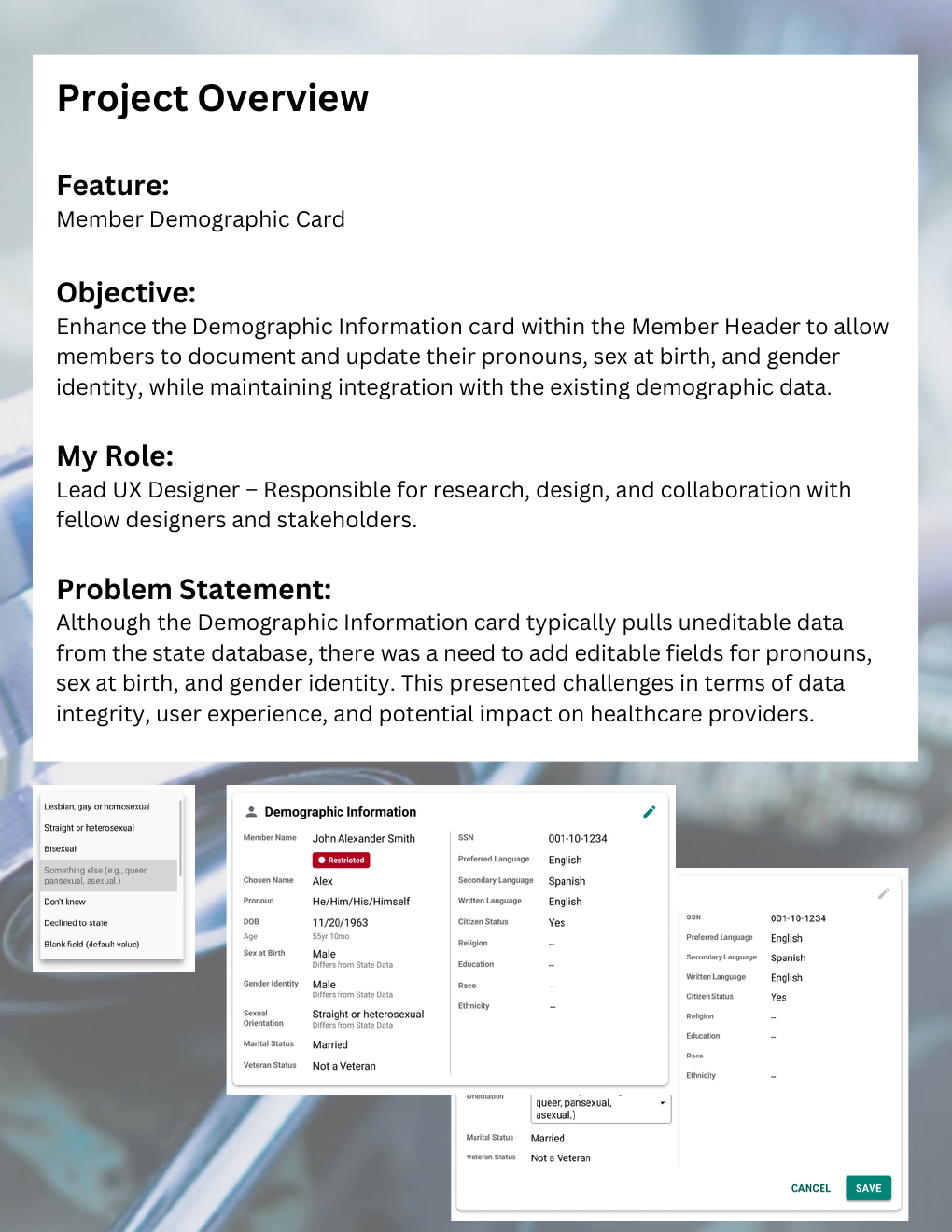
Add editable pronouns, sex at birth, and gender identity without confusing user-entered information with state-supplied data.
Research changed the question
Sensitive data needed more than an edit icon.
States did not collect or recognize this information consistently. The design needed to support personalized care while making the source of each data point unmistakable to healthcare providers.
- Distinguish member-entered and state-supplied data
- Respect different legal and regional requirements
- Fit editable controls into a constrained member header
- Protect performance and accessibility
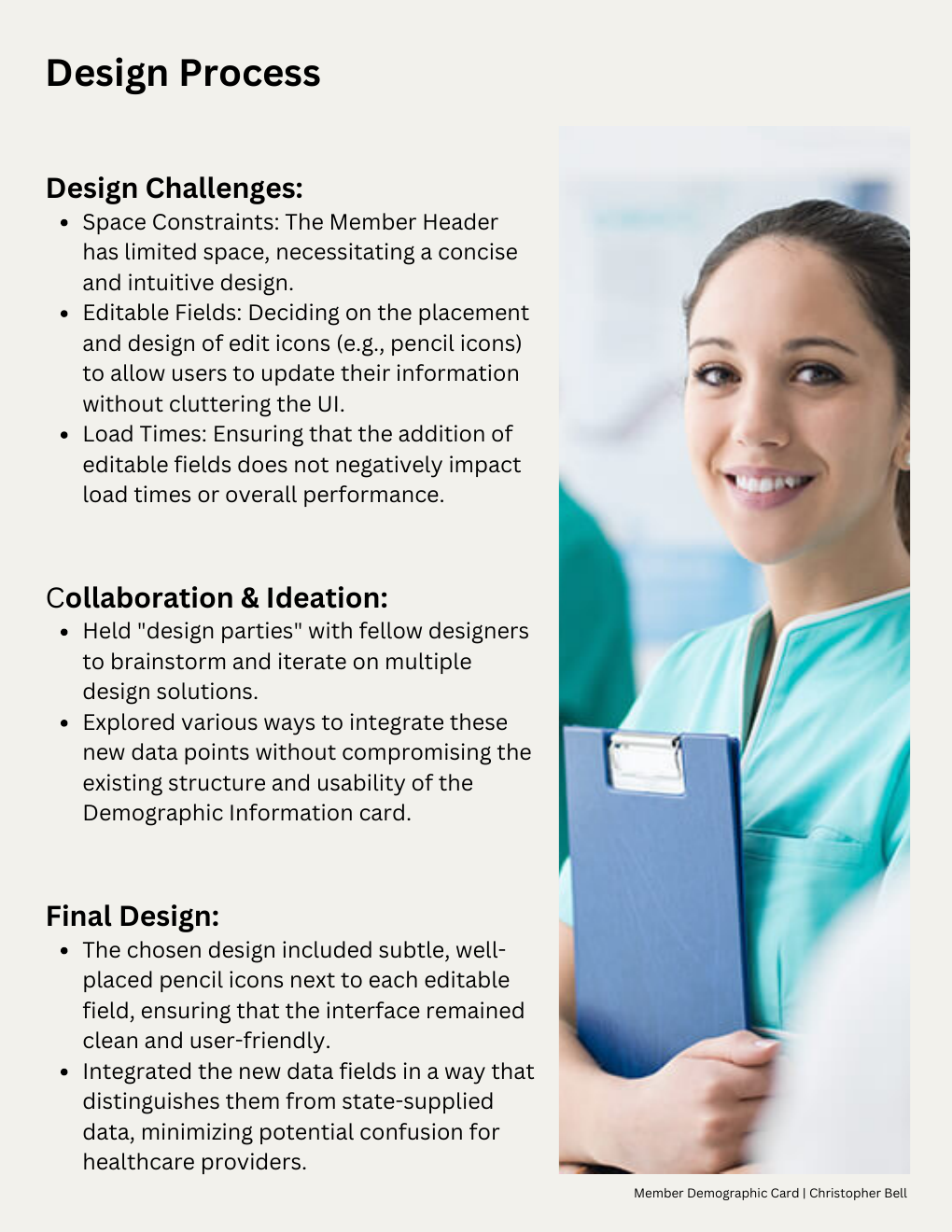
The design passed peer, accessibility, and design-system reviews. Development was later delayed because organizational priorities changed.
Workstream 02
Risk scores in TruCare Cloud
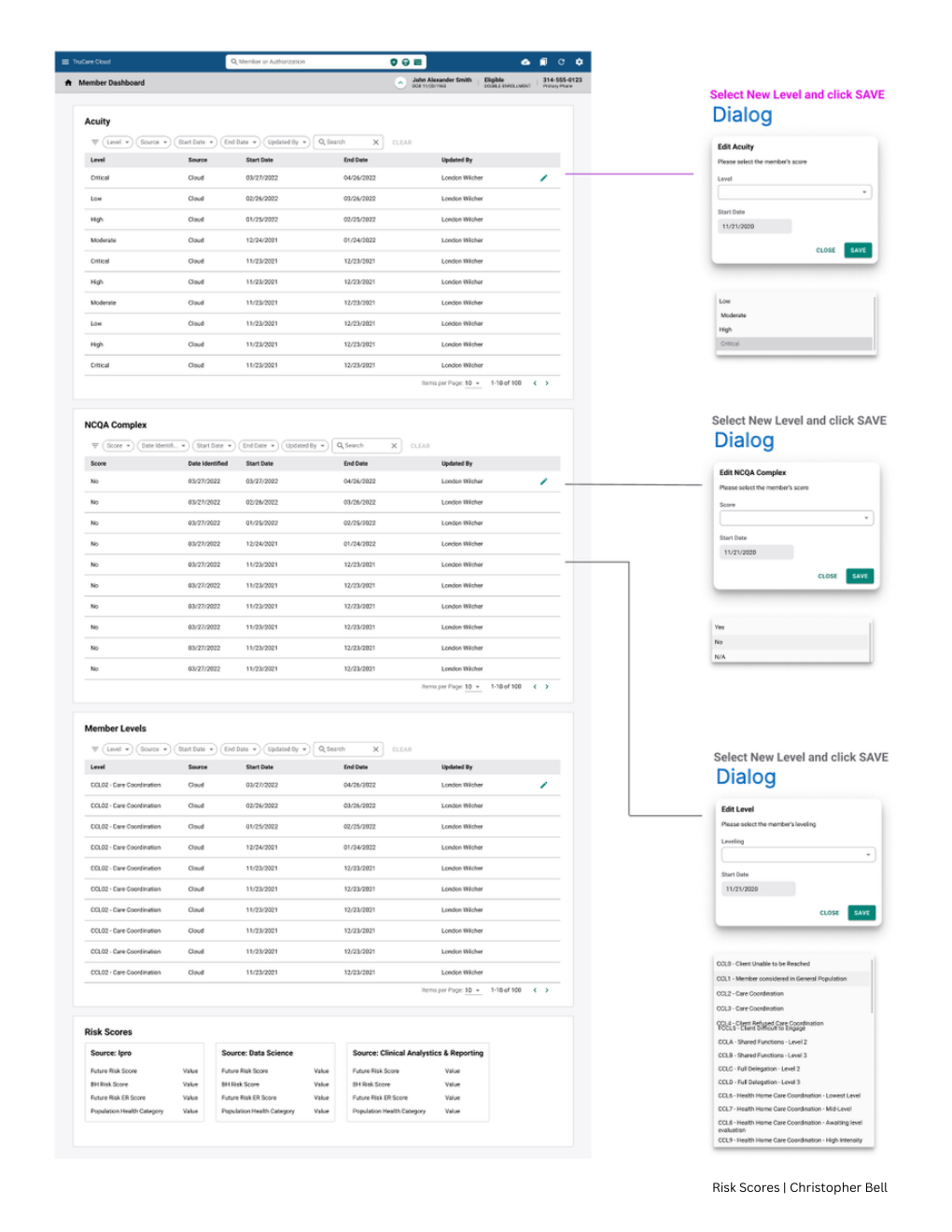
Bring critical risk information into the care-management workflow so care managers no longer need to switch to Impact Pro to understand a member's needs.
From interviews to hierarchy
Show what matters now. Keep the full history close.
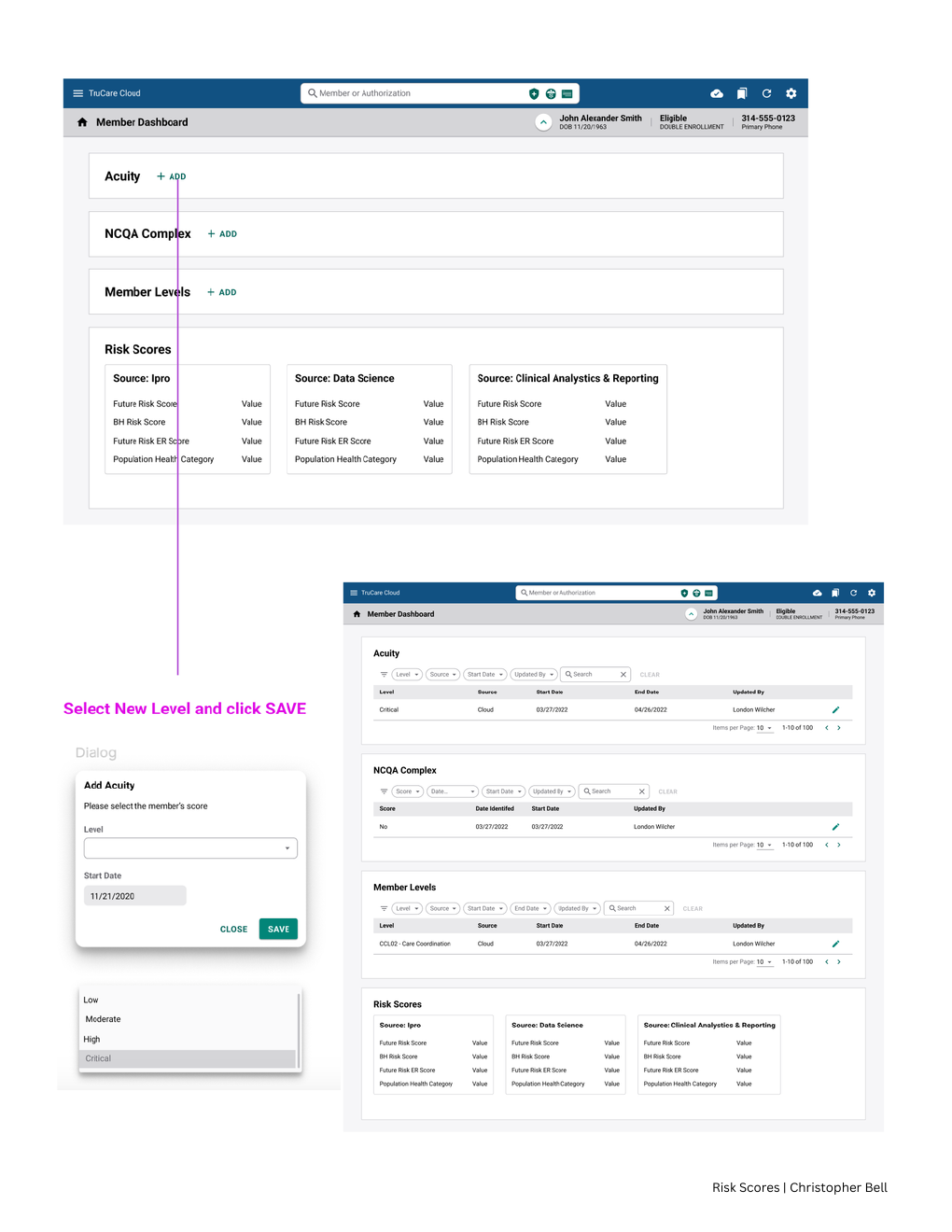
Care-manager interviews revealed that risk scores vary widely and are not equally important. The solution prioritized the five most useful scores on the dashboard and placed the complete, editable record one step away.
Top five scores
The dashboard surfaces the signals care managers use most.
Complete score history
A dedicated view supports deeper review, adding, and editing.
API-aware design
Design and development aligned on the data sources needed for integration.
Workstream 03
Medicare public homepage
Help adults 65 and older find coverage information without demanding more personal information than the experience needs.
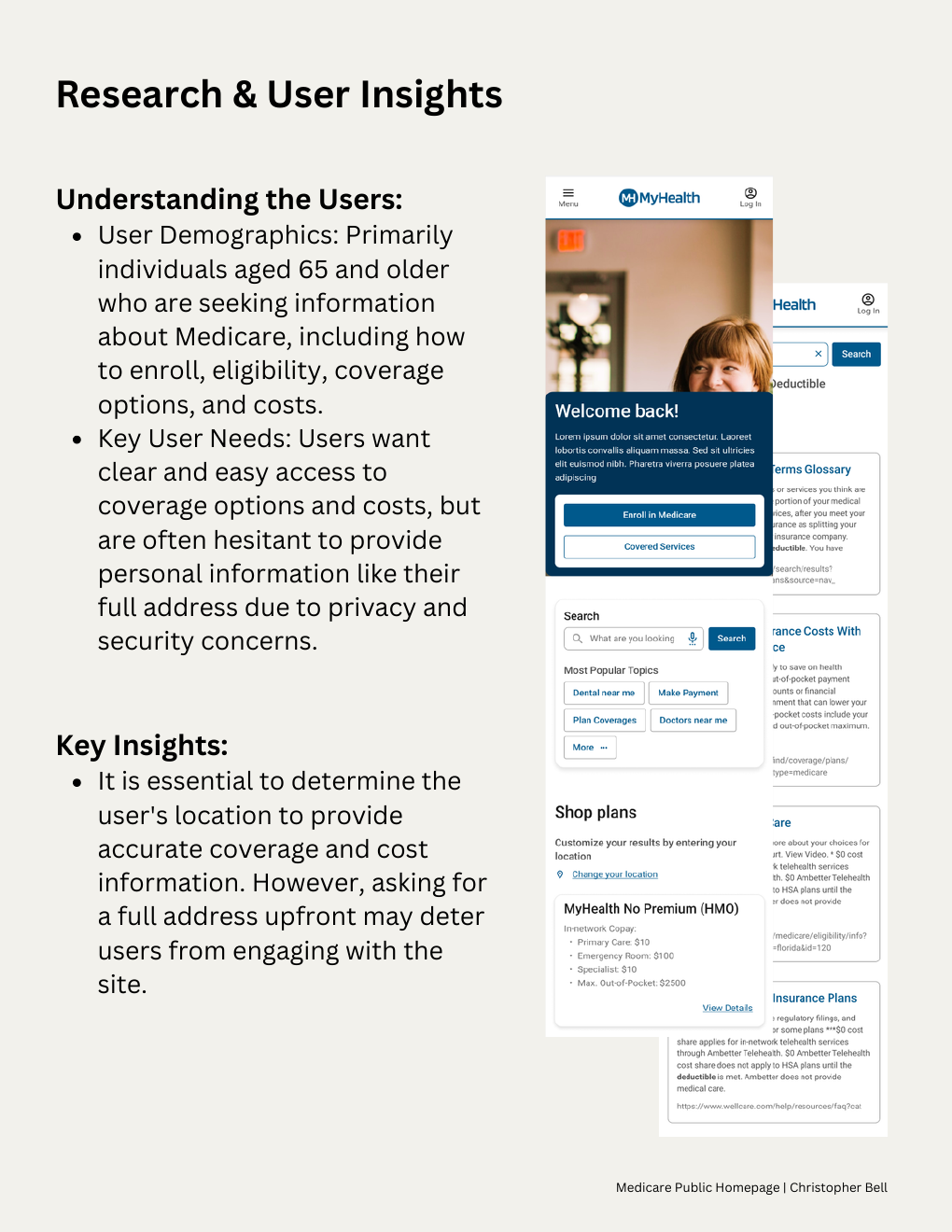
Privacy-aware personalization
Ask for a ZIP code before asking for an address.
Coverage and cost information depends on location, but a full address creates an unnecessary trust barrier. A ZIP code gives the system enough context to personalize the session while letting users stay in control.
Collect the minimum information needed to make the next step useful.
Search that supports real questions
Make Medicare easier to explore.
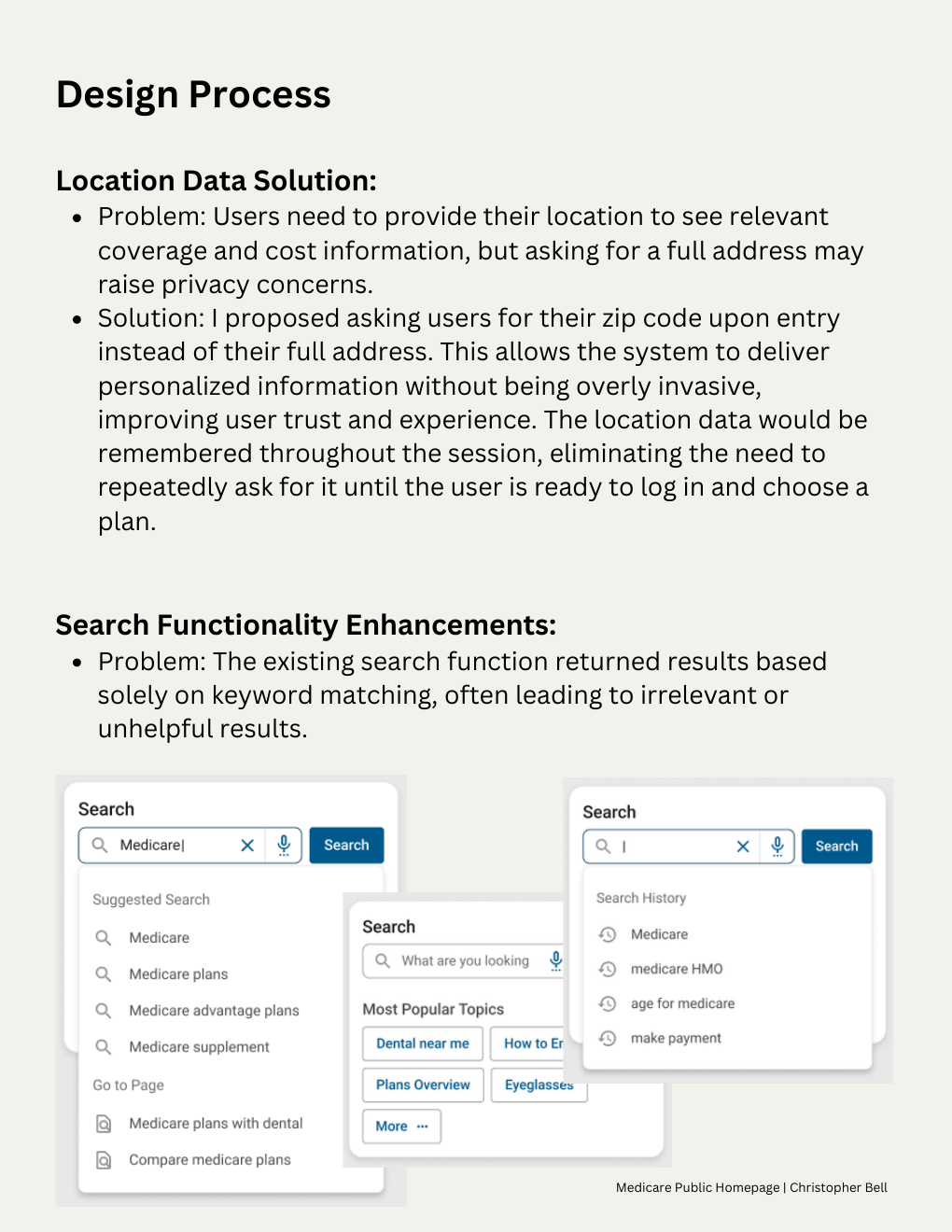
The search experience expanded beyond literal keyword matches. Location-aware results, popular-topic chips, autofill, search history, and voice input helped users reach useful information with less effort.
- Location-aware results
- Popular-topic shortcuts
- Autofill and recent searches
- Voice-search exploration
The homepage work was ongoing in the source case study, with continued research validation, feasibility review, and iteration.
What this work demonstrates
Senior UX is the ability to hold the whole system.
Across these projects, the screen was only one part of the problem. Strong decisions came from understanding legal variation, clinical workflows, data sources, accessibility standards, technical constraints, and the trust users place in healthcare products.